
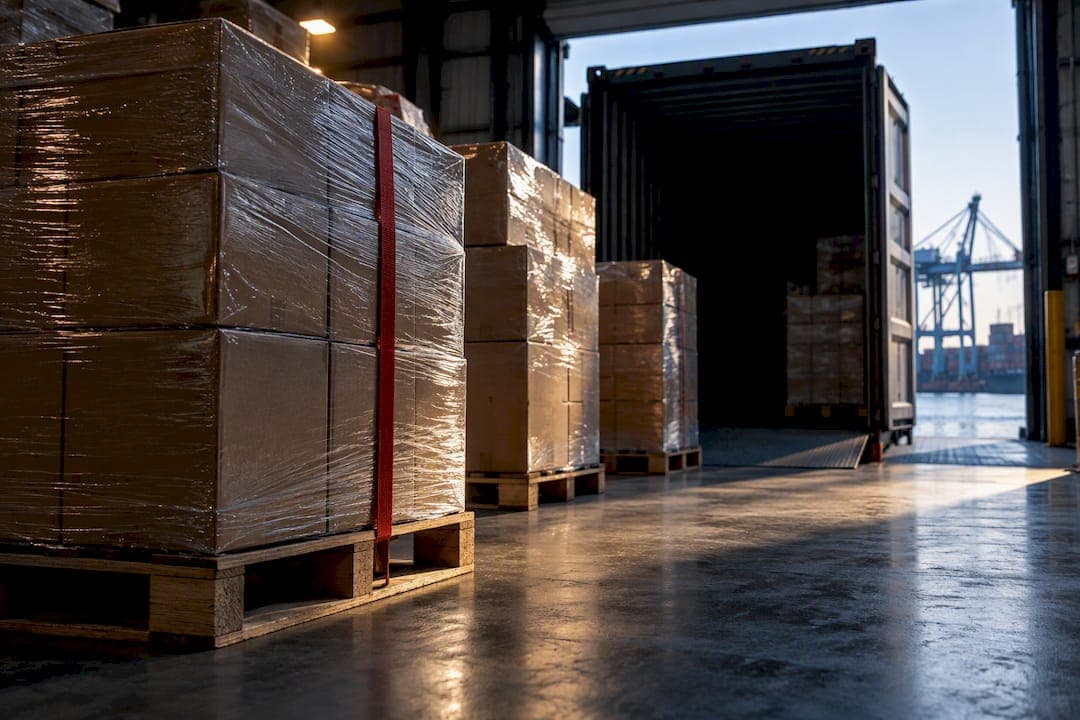
China sourcing risk in 2026 is no longer a pricing question. It's a bundled exposure across regulatory enforcement, operational continuity, and geopolitical leverage that procurement teams must quantify in dollars, not gut feel. The three moves that matter most this quarter: map your supply chain past tier-1, run every active China supplier through a UFLPA-style documentation check, and get legal counsel reviewing supplier communications before Customs and Border Protection comes asking, not after.
TL;DR:
- Most procurement risks now come from regulatory, operational, geopolitical, and commercial factors, each requiring detailed documentation and monitoring.
- CBP enforces strict proof requirements for UFLPA due to forced labor and China’s countermeasures, making supply chain transparency and raw material origin tracing critical.
- Fake factories, shell companies, and transshipment launders are common deception tactics that can be uncovered through detailed reconciliation of production data and unannounced inspections.
- Disruptions in critical minerals, APIs, and semiconductor inputs often stem from China's processing monopoly and export controls, emphasizing the need for category-specific risk management and diversification.
- Quantifying China sourcing risk in dollars with tools like SupplyMind.ei helps prioritize actions and avoid treating all suppliers uniformly, reducing emotional gut-feel decisions.
Table of Contents
- Why China Sourcing Risk Now Spans Four Distinct Buckets
- Regulatory and Legal Risk: UFLPA Enforcement Meets China's New Countermeasures
- Operational Risk: Fake Factories, Shell Companies, and Transshipment Laundering
- Geopolitical Leverage: Minerals, Pharmaceutical Inputs, and Chip Chokepoints
- The Six-Dimension Supplier Scoring Model
- Mitigation Levers: Contracts, China+1, and Safer Audits
- Which Categories to Keep in China, and Which to Move
- Mindpod's Approach: Turning Supplier Risk Into Dollar Exposure
- Labor Standards Beyond UFLPA: The Broader Human Rights Exposure
- Cybersecurity and Data Protection Risks With Chinese Suppliers
- Intellectual Property Risk: Protecting Designs and Processes in China
- Environmental Compliance and Sustainability Risk in Chinese Supply Chains
- Author Perspective: Pragmatic Recommendations for SMB Procurement Leads
- How Mindpod Helps You Quantify and Act on China Sourcing Risk
- Primary Sources Worth Bookmarking
- Sources
- FAQ
Why China Sourcing Risk Now Spans Four Distinct Buckets
Procurement teams used to price China sourcing risk as a single line item: freight, tariffs, and a currency buffer. That model is obsolete. Four separate risk buckets now feed into what a purchase order actually costs, and treating them as one number is how companies get blindsided.
Regulatory risk covers forced-labor enforcement, sanctions exposure, and export-control violations that can freeze a shipment at the port or trigger a federal investigation. Operational risk covers factory shutdowns, shell companies, and the kind of production shortfalls that show up as a missed ship date with no warning. Geopolitical risk covers China's willingness to use export controls on critical minerals, pharmaceutical ingredients, and semiconductor inputs as leverage in a broader dispute that has nothing to do with your purchase order. Commercial risk is the familiar one: supplier financial failure, quality drift, and currency swings.
The old habit of pricing a supplier relationship off the ex-works quote is now actively dangerous. Tariff volatility alone has rewritten procurement economics for U.S. importers, and USTR's own reporting on China trade compliance documents how unpredictable trade policy has become a standing input to sourcing decisions, not a one-time shock to absorb. Add compliance documentation costs, the capital tied up in longer safety stock, and the reputational cost of a UFLPA detention, and the "landed cost" of a product can run well above the number on the purchase order.
Here's the shift that catches most procurement leads off guard: risk now lives at the product level, not the country level. Two SKUs sourced from the identical factory can carry completely different risk profiles, because one uses a cotton input with a Xinjiang nexus and the other doesn't. Scoring "China" as a single risk category misses this entirely.
Where the four risk buckets typically show up:
- Regulatory: UFLPA detentions, Entity List additions, sanctions screening failures
- Operational: undisclosed subcontracting, factory closures, capacity overstatement
- Geopolitical: export-control changes on minerals, APIs, or semiconductor inputs
- Commercial: supplier insolvency, raw material cost spikes, quality degradation
The number that should worry procurement leaders most: it isn't a tariff rate. It's the share of your supplier base you genuinely cannot see past tier-1, because that's exactly where CBP expects documentation you likely don't have yet.
Regulatory and Legal Risk: UFLPA Enforcement Meets China's New Countermeasures
The Uyghur Forced Labor Prevention Act creates a rebuttable presumption that any goods sourced wholly or in part from Xinjiang, or produced by an entity on CBP's UFLPA Entity List, are made with forced labor and barred from entry. The presumption is the default position. The burden sits entirely on the importer to rebut it with clear and convincing evidence, and most companies underestimate how high that bar actually is.
CBP guidance and enforcement data show a consistent pattern in failed rebuttals: importers submit tier-1 supplier attestations and call it done, while CBP wants tier-2 and tier-3 documentation tracing raw materials back through the chain. CBP's forced labor importer due diligence guidance is explicit that rebuttal packages commonly fail because of missing input-purchase records and mismatches between a factory's claimed production volume and the raw materials it can document buying. If a factory says it made 500,000 units but its cotton purchase invoices only support half that volume, the gap itself becomes evidence against you.
CBP's broader enforcement toolkit, including Withhold Release Orders and Entity List findings, makes clear that detention risk isn't limited to companies knowingly sourcing from banned entities. It extends to anyone who can't produce a defensible paper trail on demand.
The new wrinkle for 2026 is China's own countermeasure regime. State Council Order No. 834, alongside the related Decree No. 835, gives Chinese authorities broad investigatory power over foreign companies and individuals whose actions are deemed harmful to China's industrial or supply-chain security. According to legal analysis from Morgan Lewis, that scope includes measures that can restrict a foreign company's market access in China or impose exit bans on individual employees traveling there. A due-diligence audit or forced-labor questionnaire that reads, to a Chinese regulator, as an attempt to disrupt supply-chain security could theoretically expose your own staff to travel restrictions.
That creates a genuine conflict of laws: U.S. rules require documentation that China's new rules can treat as a hostile act. Practical steps that reduce exposure on both sides:
- Route every forced-labor and origin questionnaire through legal counsel before it's sent to a Chinese supplier
- Strip investigatory or accusatory language from procurement communications; frame requests as routine quality and compliance documentation
- Keep a paper trail showing the request was standard practice applied across your supplier base, not targeted at one country
- Brief any employee traveling to China on current exit-ban risk tied to their role in supplier audits
The U.S. State Department's Xinjiang Supply Chain Business Advisory reinforces the same point from the other direction: any Xinjiang-linked supplier relationship now carries legal and reputational risk substantial enough to warrant its own review track, separate from routine supplier onboarding.
Operational Risk: Fake Factories, Shell Companies, and Transshipment Laundering
A supplier that looks legitimate on paper can still be a shell. The deception patterns procurement teams run into most often are surprisingly consistent, and a basic address verification catches almost none of them.
The classic move is transshipment laundering: goods produced partly or wholly in a restricted region get routed through a third country, relabeled with a new country-of-origin, and shipped to the U.S. as if they never touched the flagged region. A factory in Xinjiang can supply raw cotton to a "finishing" facility in Southeast Asia that does minimal processing, and the finished garment arrives with paperwork claiming an entirely different origin. The geographic-proxy version of this risk is precisely what the State Department's Xinjiang advisory warns companies to screen for, since a supplier's registered address tells you almost nothing about where its inputs actually originated.
Shell companies present a related problem. A factory can exist, produce real goods, and still be a front for subcontracted work performed at an undisclosed, unaudited facility, sometimes one with forced-labor exposure the buyer never sees during a scheduled site visit.
Five verification steps that catch what a site visit alone misses:
- Reconcile the factory's claimed output volume against its documented input purchases, matching production quantity to raw material invoices
- Cross-check transport manifests against production dates to confirm goods moved when the factory says they were made
- Request payroll and social-insurance filings, which are far harder to fabricate convincingly than a production log
- Prioritize unannounced or short-notice inspections over scheduled visits, since scheduled audits are the easiest to stage
- Verify subcontractor disclosures independently rather than accepting the primary factory's self-report
Industry playbooks describing UFLPA rebuttal failures point to the same root cause repeatedly: a lack of tier-2 and tier-3 visibility, where companies rely on a single attestation from the tier-1 supplier instead of independently reconciling production and transport records. That reconciliation step, checking whether the numbers actually add up, is what separates real due diligence from paperwork theater.
Pro Tip: Ask a supplier for their utility bills alongside production records. A factory claiming three shifts of output on a fraction of the electricity load a plant that size should be drawing is a red flag that's almost impossible to fake convincingly.
Geopolitical Leverage: Minerals, Pharmaceutical Inputs, and Chip Chokepoints
China's dominance isn't primarily in mining critical minerals. It's in processing them, and that distinction is what makes the leverage so effective. A country can hold enormous reserves of a mineral and still depend on Chinese refining capacity to turn raw ore into a usable industrial input.
The U.S.-China Economic and Security Review Commission's analysis of supply-chain weaponization documents how China has used export controls on critical minerals as a coercive tool in disputes that have nothing to do with the buyers actually affected. A procurement team sourcing a component with rare-earth content can find its supply disrupted by a policy dispute several steps removed from anything it did.
Pharmaceutical active ingredients, APIs, follow a similar pattern. A large share of the API supply feeding U.S. generic drug manufacturing runs through Chinese production. An export restriction, a factory shutdown, or a deliberate slowdown in that pipeline doesn't just delay a shipment. It can ripple into hospital formularies and pharmacy shelves months later, since the health-system impact of an API disruption shows up downstream, not at the point of restriction.
Semiconductors carry a different but related exposure. Export controls on chip-related equipment and materials have already stretched qualification timelines for buyers who need a specific component re-sourced or re-certified. A part that used to be a two-week reorder can become a six-month requalification project if the original supply path gets cut off by policy rather than by a business decision.
Brookings' assessment of the U.S.-China trade war reinforces that these disruptions rarely stay contained to the sector where they originate. Tariff and export-control actions tend to cascade into adjacent categories that buyers didn't expect to be affected.
Signals that a category has crossed into strategic-risk territory:
- Your bill of materials includes a critical mineral, rare earth, or specialty chemical with limited non-China processing capacity
- The category has appeared in recent Entity List additions or export-control announcements
- Lead times for a component have stretched without a corresponding change in your order volume
- A single Chinese region or firm accounts for a disproportionate share of global processing capacity for that input
If two or more of those signals apply to a category, it belongs on your watch list for the six-dimension scoring framework below, not just your general supplier list.
The Six-Dimension Supplier Scoring Model
A scoring framework only earns its place if it forces disqualification, not just a color-coded dashboard. The model that maps most directly to procurement governance scores six dimensions, each on a simple scale, with one absolute rule: a score of 1 on any dimension is disqualifying, full stop.

The six dimensions are financial stability, legal standing, operational capability, compliance history, geographic exposure, and counterparty structure. Default weighting treats all six as roughly equal, though buyers with heavier regulatory exposure often weight compliance and geographic risk higher.
Geographic exposure deserves the strictest rule of the six: a confirmed Xinjiang nexus, whether in raw material sourcing or subcontracted labor, should function as an automatic bar under current UFLPA-driven policy, regardless of how strong the supplier scores elsewhere. There's no averaging your way out of that one.
| Dimension | What it measures | Key documents required |
|---|---|---|
| Financial | Solvency, payment history, capital reserves | Audited statements, bank references |
| Legal | Corporate registration, litigation history | Business license, court filings |
| Operational | Production capacity vs. claimed output | Input invoices, transport manifests |
| Compliance | UFLPA/sanctions screening history | Entity List cross-check, prior detentions |
| Geographic | Regional sourcing exposure, Xinjiang nexus | Raw material origin certificates |
| Counterparty | Subcontractor disclosure, ownership transparency | Beneficial ownership records |
Continuous monitoring matters as much as the initial score. A one-time manual check is outdated the moment a supplier changes subcontractors or a new Entity List addition lands. Automated re-scoring, triggered by Entity List updates, financial filing changes, or a factory ownership change, is becoming standard practice precisely because regulatory conditions shift faster than annual audit cycles can track. Our guide on running a supplier risk assessment walks through how to structure that cadence in practice.
Mitigation Levers: Contracts, China+1, and Safer Audits
You don't need to exit China overnight to materially cut your exposure. Four levers do most of the work, and they can be layered rather than chosen one at a time.
1. Rewrite contract clauses before the next renewal cycle. Build in the right to audit subcontractors, not just the primary factory, and require advance disclosure of any subcontracting arrangement. Add a clause requiring the supplier to maintain documented input-purchase records for a minimum retention period, since that's exactly what CBP asks for during a UFLPA rebuttal.
2. Decide on China+1 using a real cost model, not a slogan. Near-shoring or diversifying to a second country only makes financial sense when the landed-cost delta, including compliance documentation cost, capital tied up in longer lead times, and detention risk, is smaller than the premium of qualifying a second supplier. For commodity categories with thin margins, that math often favors staying put with tighter documentation. For IP-sensitive or high compliance-risk categories, it usually favors diversifying even at a cost premium.
3. Use inventory and financing hedges to buy time rather than force a decision. Segmented lead times, holding extra safety stock on the highest-risk SKUs while running just-in-time on low-risk commodity items, let you absorb a disruption without a full supply-chain overhaul.
4. Redesign how audits get run, not just what they ask. Legal counsel should pre-approve every forced-labor and origin questionnaire before it goes to a Chinese supplier, both to strengthen the documentation's evidentiary value and to avoid language that reads as an investigation under China's 2026 supply-chain security rules. Route sensitive audit findings through counsel-controlled data custody rather than a shared procurement drive, and designate a single trained point of contact to ask supplier-facing questions, since inconsistent phrasing across different employees creates exactly the kind of discoverable inconsistency that undermines a rebuttal package later.
Pro Tip: Draft your audit questionnaire once, get it cleared by counsel once, and reuse the exact same template across every China supplier. A standardized, pre-cleared document is far stronger evidence of routine practice than a customized questionnaire that could look targeted at any single supplier.
Which Categories to Keep in China, and Which to Move
Not every category deserves the same urgency. A rough triage saves procurement teams from treating a low-risk commodity purchase with the same intensity as an IP-sensitive component.
- IP-sensitive categories (proprietary designs, patented processes, custom tooling): prioritize diversification regardless of cost premium, since IP leakage risk compounds over time and rarely reverses
- Critical-mineral or specialty-chemical content: treat as strategic risk and begin qualifying a second source now, even if it costs more, given the geopolitical leverage points covered above
- True commodity categories with widely available alternative sourcing and low IP exposure: tighter documentation and contract clauses are usually sufficient without a full sourcing overhaul
A quick checklist for qualifying an alternative supplier:
- Confirmed production capacity matched against real utility and payroll records, not just a sales pitch
- Independent verification of input sourcing and subcontractor disclosures
- Total landed cost modeled against the current China supplier, including compliance documentation savings
- Legal review of the new jurisdiction's own labor and export-control exposure
A category should escalate to a formal transition plan when any of these trigger: a compliance score drop to disqualifying territory, a documented detention or Entity List addition tied to the current supplier, or a geopolitical signal (new export control, sanctions expansion) affecting that category's inputs.
Mindpod's Approach: Turning Supplier Risk Into Dollar Exposure
Most procurement teams can describe their China risk qualitatively. Almost none can put a dollar figure on it, and that's the gap Mindpod Technologies built SupplyMind.ei to close. The tool quantifies tariff and supplier risk in monetary terms rather than color-coded scores, translating the six-dimension model above into an actual exposure estimate for each supplier and SKU, then ranking mitigation options by the dollar impact of fixing them.
An Enterprise Intelligence Assessment starts free and produces a prioritized, plain-language plan the client owns outright, whether or not the provider is engaged for the implementation. Typical scope covers a supplier-tier mapping exercise, a first-pass six-dimension score across the active supplier base, and a prioritized list of the highest-exposure categories worth acting on first. The deliverable is built to hand to a procurement team or a fractional CTO engagement for execution, not to sit in a slide deck.
Labor Standards Beyond UFLPA: The Broader Human Rights Exposure
UFLPA is the sharpest legal edge, but it's not the only labor standard that matters to U.S. buyers. Broader forced-labor and human-rights due diligence increasingly covers wage practices, excessive overtime, dormitory conditions, and freedom-of-association restrictions that fall outside UFLPA's specific Xinjiang-nexus trigger.
A supplier can clear a UFLPA screen entirely and still expose your company to reputational risk if investigative reporting or an NGO audit surfaces wage theft or unsafe dormitory conditions at a facility you sourced from. Retailers and brands have faced exactly this kind of fallout even when no forced-labor presumption applied.
Practical due diligence should extend past the Xinjiang-nexus question to cover working-hour records, third-party social audits where available, and freedom-of-association practices at the factory level. Building this into the same six-dimension scoring cadence, rather than running it as a separate annual check, keeps the compliance dimension current instead of stale by the time an issue surfaces publicly.
Cybersecurity and Data Protection Risks With Chinese Suppliers
Sharing product specifications, forecasts, and system access with a Chinese supplier creates a cybersecurity exposure that's separate from, and often overlooked next to, the compliance and operational risks covered above. Supplier portals, shared design files, and EDI connections into a factory's systems all represent an attack surface most procurement teams don't own or monitor directly.
The practical risk isn't limited to espionage. Compromised supplier credentials are a well-documented vector for ransomware and business-email-compromise attacks that move laterally into a buyer's own network. A vendor with weak access controls on its side of a shared portal can become the entry point for an attack on yours.
Minimum practical controls: segment any supplier-facing system from core internal networks, require multi-factor authentication on every shared portal, and limit data shared with a supplier to exactly what's operationally necessary rather than granting broad forecast or inventory visibility by default. Organizations building or hardening these controls without a dedicated security team in place typically benefit from a structured cybersecurity assessment before expanding supplier data access further.
Intellectual Property Risk: Protecting Designs and Processes in China
IP leakage remains one of the most persistent, hardest-to-detect risks in China sourcing, and it rarely shows up as a single dramatic theft. More often, it's a gradual erosion: a factory quietly reuses your tooling for a competitor's order, or a design detail resurfaces in a knockoff months after your production run ends.
Contract manufacturing inherently requires sharing enough technical detail for a factory to produce your product, and that's exactly the exposure point. Splitting production across multiple factories so no single supplier holds the complete design, combined with contractual clauses assigning IP ownership and confidentiality obligations enforceable in the sourcing jurisdiction, reduces the risk without requiring you to abandon China entirely.
Registering key patents and trademarks directly in China, not just in the U.S., matters more than most SMB buyers assume, since enforcement against a local infringer is dramatically harder without a Chinese registration already in place. For genuinely high-value IP, treating the category with the same disqualification logic as the six-dimension scoring model, moving it out of China regardless of cost premium, is often the more defensible long-term call.
Environmental Compliance and Sustainability Risk in Chinese Supply Chains
Environmental exposure in Chinese sourcing splits into two distinct problems: regulatory noncompliance at the factory level, and the reputational risk of sustainability claims your own company can't actually substantiate.
Factory-level environmental violations, unpermitted wastewater discharge, improper hazardous waste disposal, can trigger sudden local government shutdowns with no warning to the buyer. A factory can be operating illegally under local environmental rules while producing goods that pass every quality inspection you run, and the shutdown risk that creates belongs in your operational continuity assessment, not a separate sustainability checkbox.
The reputational side is just as real. Buyers making public sustainability or emissions claims about their supply chain face growing scrutiny over whether those claims hold up to scrutiny at the factory level. Verifying a supplier's actual environmental permitting and waste-handling practices, rather than accepting a sustainability certificate at face value, belongs in the same documentary due-diligence process used for labor and compliance checks.
Author Perspective: Pragmatic Recommendations for SMB Procurement Leads
Most SMB procurement teams don't have the headcount to run a full six-dimension audit on every supplier this quarter, and pretending otherwise just guarantees nothing gets done. The honest prioritization is: start with your highest-volume China suppliers and any category touching Xinjiang cotton, critical minerals, or pharmaceutical inputs, and accept that lower-risk commodity suppliers can wait.
If there's one directional call worth making now, it's this: get legal counsel reviewing supplier communications before you send the next audit questionnaire, not after CBP flags a shipment. That single step prevents more downstream damage than any scoring spreadsheet. Continuous monitoring beats a perfect one-time audit every time, because the regulatory ground under this topic is still moving in 2026.
— jaras
How Mindpod Helps You Quantify and Act on China Sourcing Risk
Mindpod Technologies exists for exactly the gap most of this article describes: SMB and mid-market procurement teams who understand the risk conceptually but have no practical way to price it or act on it without hiring a compliance department they can't afford. Where a traditional compliance consultancy hands you a findings report, SupplyMind.ei turns the six-dimension scoring model into a dollar figure per supplier and per SKU, so a prioritization decision doesn't require guesswork about which fix matters most.

The starting point is the same for every client: a free Enterprise Intelligence Assessment that maps your current supplier tiers, runs a first-pass score across your active China supplier base, and produces a prioritized, plain-language plan you own outright. Typical engagements move from initial mapping to a scored supplier list within a matter of weeks, not months. If ongoing governance is the missing piece once the assessment lands, a Fractional CTO engagement can carry the monitoring cadence forward without adding a full-time hire. Schedule the assessment and see where your real exposure sits before your next supplier renewal.
Primary Sources Worth Bookmarking
Practitioners handling China sourcing risk directly benefit from going to the regulator, not a summary blog, when a decision has legal weight.
- CBP Withhold Release Orders and findings: the live list of enforcement actions and detained-entity findings
- State Department Xinjiang Supply Chain Business Advisory: the government's own risk framing for Xinjiang-linked sourcing
- Morgan Lewis analysis of China's 2026 supply-chain security rules: the clearest legal breakdown of State Council Order No. 834 and Decree No. 835
- USCC's report on supply-chain weaponization: the fullest public accounting of China's critical-mineral leverage
Sources
- China enacts first comprehensive regulations on industrial and supply chain security (Morgan Lewis)
- Beijing's Weaponization of Supply Chains (United States-China Economic and Security Review Commission)
- Xinjiang Supply Chain Business Advisory (U.S. Department of State)
FAQ
What Country Is the U.S. Most Dependent on for Sourcing?
China remains the U.S.'s largest source of critical mineral processing capacity and a dominant supplier of pharmaceutical active ingredients, according to USCC's analysis. That dependence sits mainly in processing and refining, not raw material extraction, which is why diversifying mine sites alone doesn't reduce the exposure.
What Happens if China Restricts Exports of Critical Inputs to the U.S.?
A targeted export restriction on minerals, APIs, or semiconductor materials can stretch lead times, force emergency requalification of alternate suppliers, and in pharmaceutical cases, create downstream shortages that reach hospitals and pharmacies months later. The disruption typically shows up in adjacent sectors that weren't the original target, a pattern Brookings has documented in past trade disputes.
Has China Issued Formal Warnings Tied to Supply-Chain Enforcement?
China's 2026 State Council Order No. 834 and related Decree No. 835 function as a formal regulatory warning: they give Chinese authorities investigatory power over foreign companies and individuals whose actions are judged harmful to China's industrial or supply-chain security, according to Morgan Lewis's legal analysis. That includes the possibility of market restrictions or exit bans on individual employees.
How Do U.S. Companies Reduce Sourcing Risks in China Without Fully Exiting?
The most effective near-term levers are supplier scoring with disqualification rules, contract clauses granting subcontractor audit rights, and China+1 diversification for IP-sensitive or critical-mineral categories specifically, rather than a blanket exit. Tools like SupplyMind.ei help quantify which categories carry enough dollar exposure to justify the cost of diversifying first.
What Documentation Does CBP Expect for a UFLPA Rebuttal?
CBP expects tier-2 and tier-3 documentation, including input-purchase invoices and transport manifests that reconcile with a factory's claimed production volume, per CBP's own due-diligence guidance. A single tier-1 supplier attestation, without that reconciliation, is the most common reason rebuttal packages fail.